Elon Musk says SpaceX could eventually be worth a million times the size of today’s global economy if it makes humanity multiplanetary and captures even one-millionth of the Sun’s energy, setting out a vision far beyond the company’s existing launch and satellite businesses.
Musk argued in a November 26 post that those achievements could make SpaceX worth “about a million times the current global economy.” He called the goals “absurdly difficult” and did not give a timetable or financial model for reaching that valuation.
The statement followed his pledge to give U.S. children two SpaceX shares through company and personal contributions, linking the proposed gift to his expectations for the business’s long-term future.
Why a millionth of the Sun is an enormous target
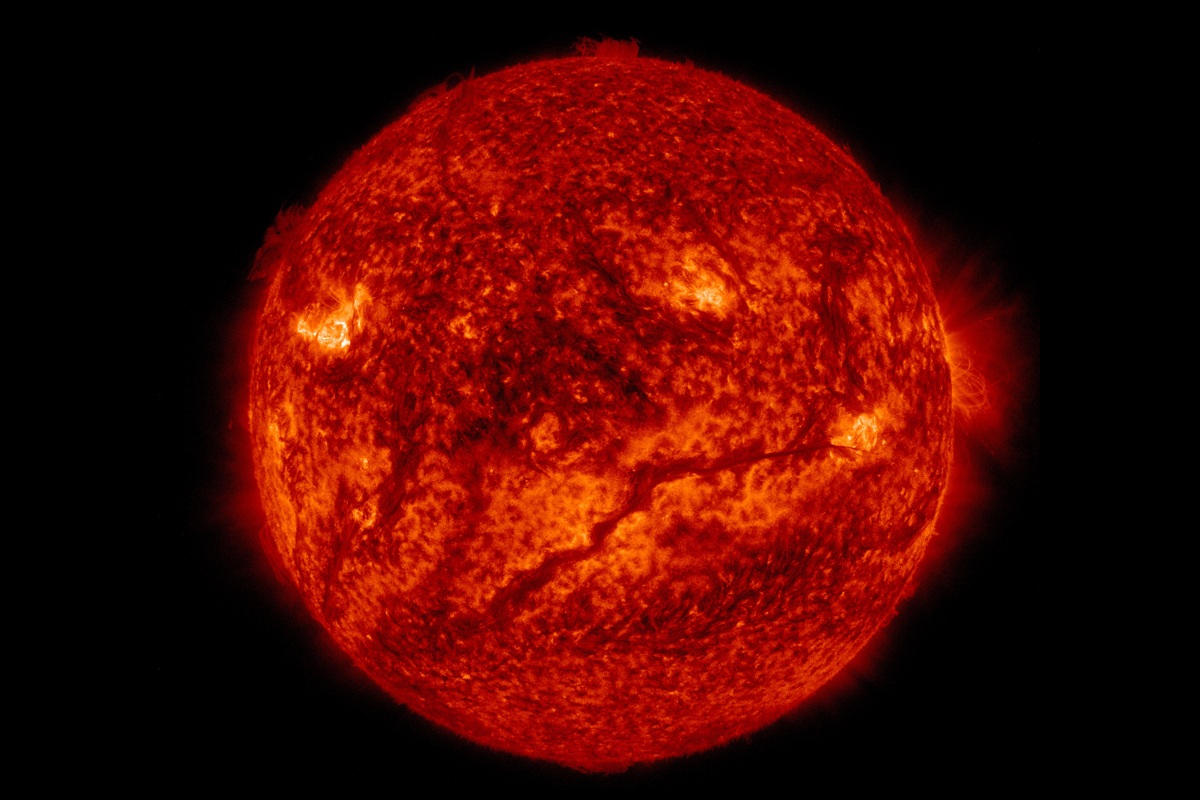
NASA lists the Sun’s luminosity at approximately 3.828 × 1026 watts. One-millionth of that output is about 3.8 × 10²⁰ watts, or roughly 383 million terawatts.
For comparison, the Energy Institute’s latest statistical review puts global energy supply above 600 exajoules in 2025. An annual supply of 600 exajoules corresponds to an average power of about 19 terawatts.
Using that rounded reference gives a ratio of roughly 20 million to one. This is a scale comparison with humanity’s total energy supply, including fuels, rather than electricity consumption alone. It also precedes any losses involved in collecting sunlight and converting it into useful power.
The leap from power to company value
Musk’s statement combines a physical ambition with a financial prediction. A company’s market value measures the value investors assign to its equity. Global economic output, usually expressed as annual GDP, measures production over a year. They describe different quantities.
Turning vast energy resources into corporate value would require productive uses for that power, paying customers and an economic return on the infrastructure. The energy calculation itself supplies no valuation model.
Starmind is a nearer-term step
SpaceX’s orbital computing plans give the broader vision a current industrial context. The FCC has authorized up to one million Starmind satellites with conditions, creating a regulatory path for computing infrastructure powered by sunlight in orbit.
That project still requires spacecraft production, launch capacity, communications and heat-management systems at immense scale. Musk’s latest claim extends the ambition much further: from operating an orbital computing network to building a space economy capable of harnessing a meaningful fraction of stellar power.