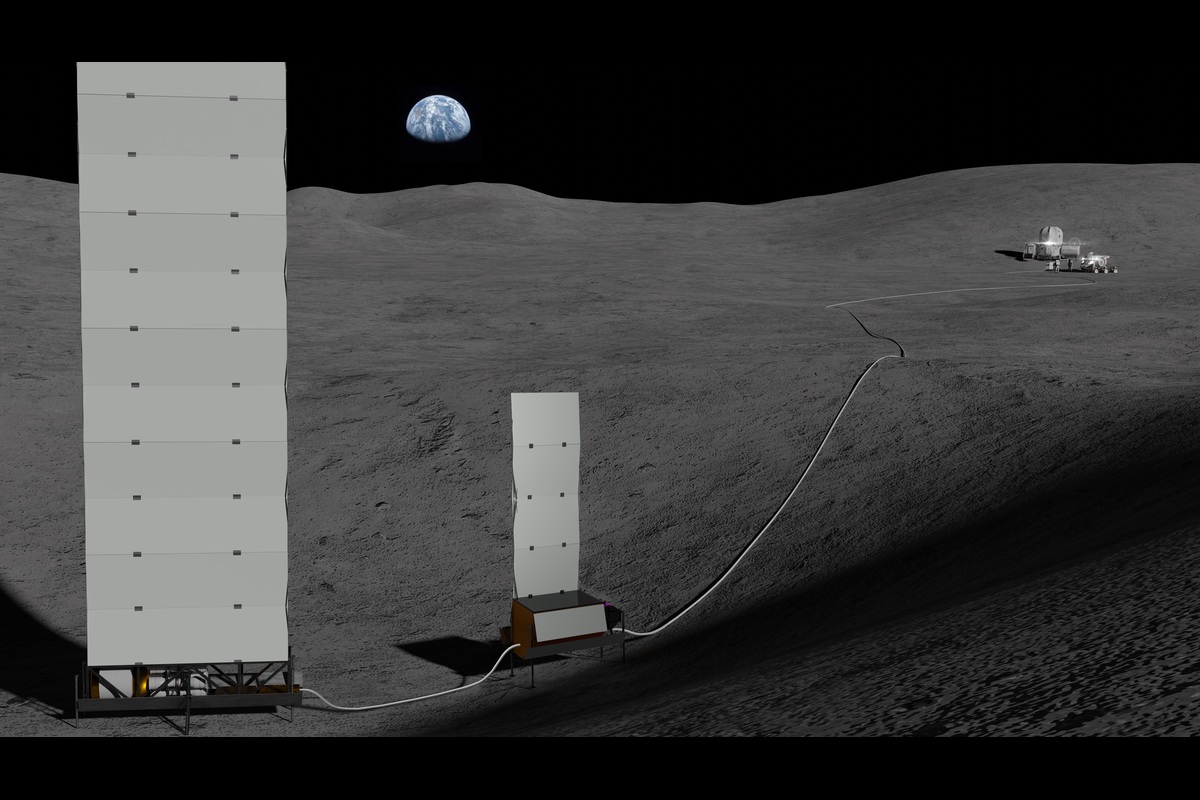
NASA is asking industry to design and test a nuclear reactor for the Moon, moving toward a power supply that could keep future surface operations running through extended periods of darkness.
The agency announced the solicitation on November 23. Lunar Reactor-1, or LR-1, is intended to generate 20 kilowatts of electricity, reach launch readiness by 2030 and operate for at least five years after deployment. Proposals are due December 21.
Electricity through the lunar night
NASA plans to build its Moon Base near the lunar South Pole through a series of crewed and robotic missions. The approach starts with demonstrations and experiments, then adds infrastructure and capabilities over time.
That infrastructure needs dependable power for people and equipment. LR-1 could supply habitats, communications systems, rovers and scientific instruments during lunar nights lasting roughly two Earth weeks.
NASA’s Space Reactors Division identifies independence from sunlight as a central reason for developing fission power. The proposed surface reactor would help astronauts live, work and explore when solar generation is unavailable.
Design and testing come before deployment
The request covers technology development, testing and flight design. NASA says the reactor must meet Department of Energy safety standards, with the two agencies working together on the program.
The 2030 objective concerns readiness for launch. The announcement does not establish that a reactor will be operating on the lunar surface that year.
Two different roles for space reactors
LR-1 is part of a wider nuclear-technology effort. The same NASA division is developing Space Reactor-1 Freedom, a separate spacecraft targeted for launch in 2028 to demonstrate nuclear-electric propulsion and deliver three SkyFall helicopters to Mars.
The lunar project addresses a different requirement: electricity at a fixed destination. Its proposed role in the Moon Base links the reactor effort to NASA’s broader plan to use lunar operations to prepare for future human exploration of Mars.