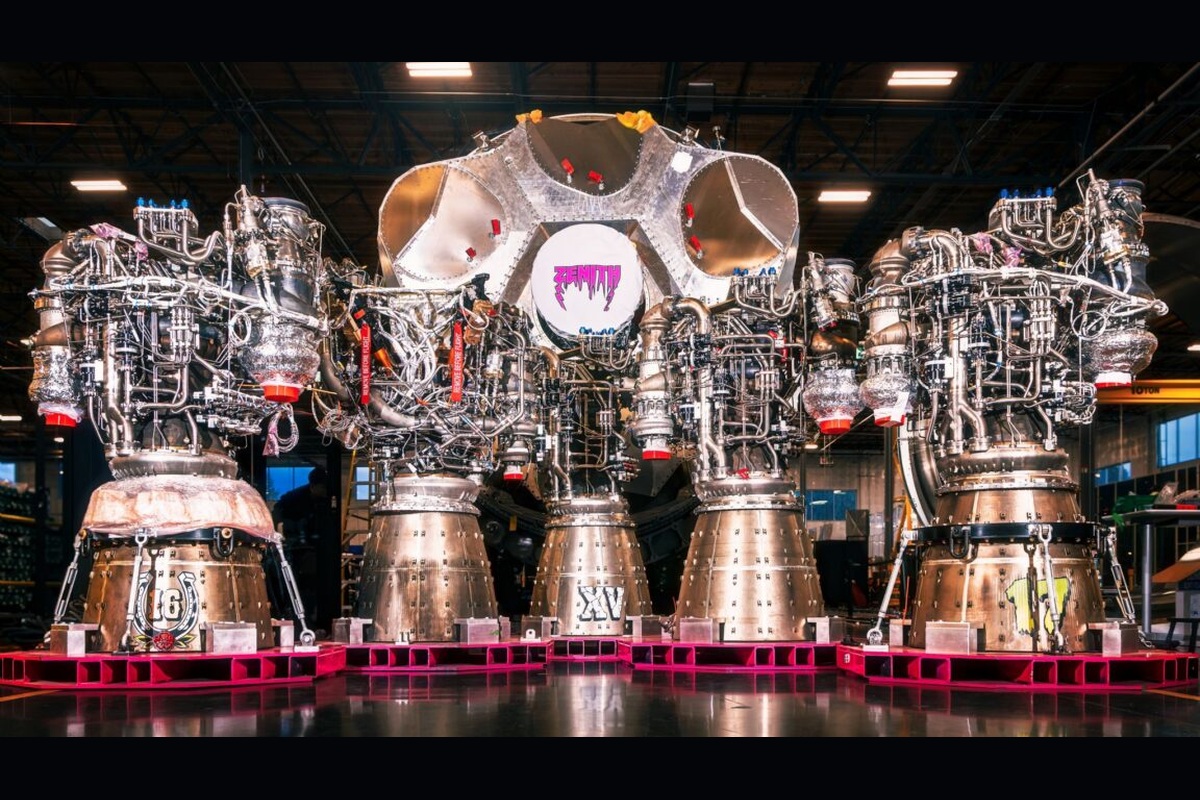
Stoke Space says development of its Zenith rocket engine is complete and flight units are being shipped to Cape Canaveral, moving a central part of its Nova program from development toward vehicle integration.
The company announced the milestone on November 19. Engines that pass acceptance testing are being sent to Florida each week for installation on Nova’s first stage.
Seven engines for the first stage
Stoke lists seven Zenith engines for Nova Pathfinder’s first stage, burning liquefied natural gas and liquid oxygen. Their combined thrust exceeds 700,000 pounds, according to the company.
Zenith uses full-flow staged combustion, an engine cycle intended to make efficient use of its propellants. Completing development is a milestone for that propulsion system; the integrated rocket still has to demonstrate its performance in flight.
Pathfinder comes before full reuse
Nova Pathfinder is Stoke’s first flight configuration and technology demonstrator, with a listed payload capacity of 2,500 kilograms to low Earth orbit. The company frames it as a vehicle for proving the technologies needed for full and rapid reuse.
Those technologies extend beyond the booster engines. The upper stage uses the hydrogen-fueled Andromeda engine and an actively cooled heat shield, tackling the difficult problem of returning an orbital upper stage through the atmosphere.
Florida infrastructure is expanding
In a November 6 announcement, Stoke outlined plans to expand north of its existing Space Launch Complex 14 site. The initial right-of-entry authorization permits engineering studies, environmental assessments and surveys for that expansion.
The company then targeted Nova Pathfinder’s first orbital flight for early 2027 and the larger Nova Block 2 for 2029. The engine shipments are a concrete step toward the nearer launch, while successful integration, testing and flight remain the measures that will determine progress from here.