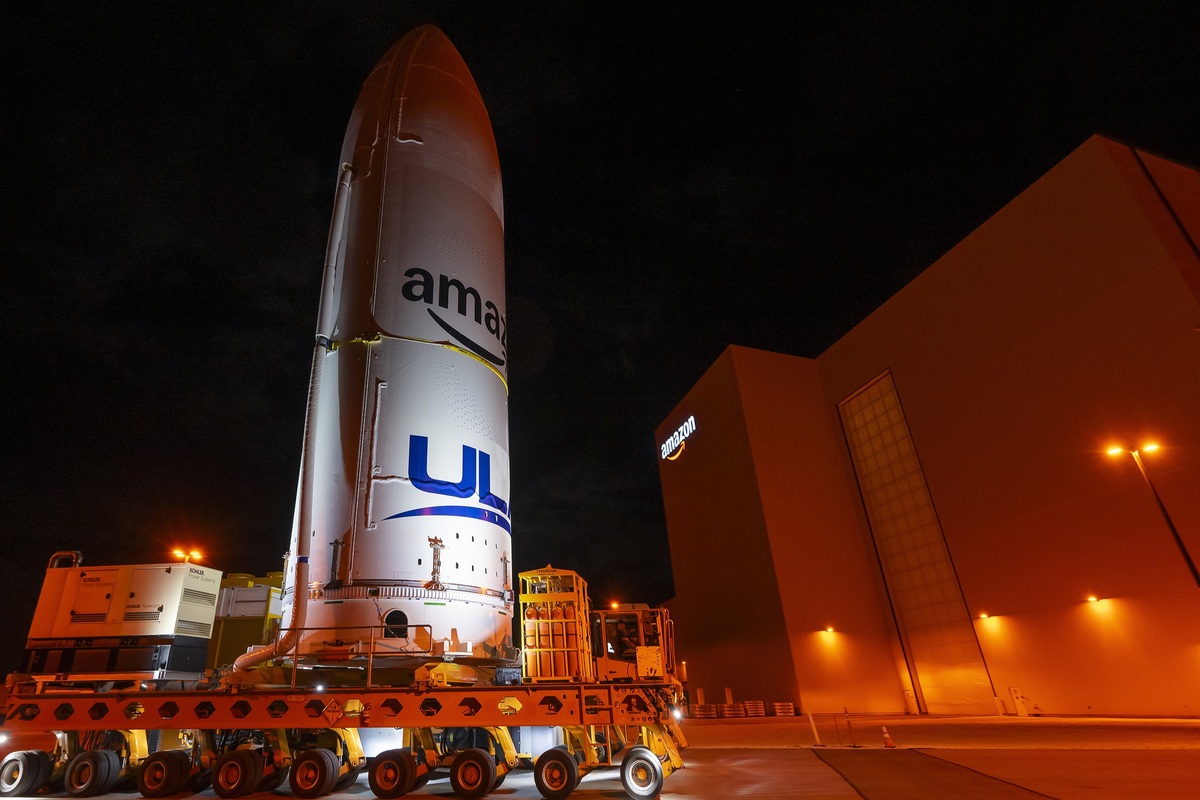
A United Launch Alliance Vulcan rocket failed to deliver 40 Amazon Leo satellites to orbit on Sunday, destroying the largest batch the company had attempted to launch and disrupting a key part of its effort to challenge SpaceX’s Starlink network.
ULA confirmed an anomaly about 10 minutes into the November 15 flight from Cape Canaveral Space Force Station in Florida. Amazon separately confirmed that the payload was lost.
The mission, called Leo Vulcan 1, or LV-01, was Vulcan’s first launch for Amazon. It was also ULA’s first total mission failure since the company’s formation in 2006, Ars Technica reported.
The loss reaches beyond 40 satellites
Amazon had built its deployment plans around a substantial Vulcan campaign. Before launch, the company outlined a contract for 38 missions carrying more than 1,500 first-generation Leo satellites. It described Vulcan as its primary workhorse for the next several years.
That makes the next launch date as important as replacing the lost spacecraft. A prolonged interruption would slow the delivery of satellites needed to expand the broadband network’s coverage and capacity.
Amazon expressed continued confidence in ULA after the failure, saying it expected the launch provider to learn from the mission. That support does not establish when Vulcan will be ready to fly again.
A new configuration, with the cause still to be established
LV-01 introduced a shorter, low-Earth-orbit-optimized version of the Centaur V upper stage and was Vulcan’s first mission with six solid rocket boosters. Amazon had planned the combination to increase the number of satellites carried on each flight.
Those changes are part of the mission’s background, rather than an explanation for the failure. ULA’s initial public statement identified the unsuccessful outcome but did not establish its cause. The investigation will need to distinguish the underlying fault from the effects that followed it.
Amazon’s other launch providers become more important
Amazon’s launch portfolio also includes Arianespace, Blue Origin and SpaceX. Its latest mission update lists an Ariane 6 flight carrying 36 more Leo satellites for no earlier than November 23 from French Guiana. That mission remains a target, rather than a completed deployment.
The implications extend to national security. Vulcan is also a major launcher for the United States Space Force, making its reliability important beyond Amazon’s network. Meanwhile, SpaceX is preparing two more classified Space Force missions on Falcon 9 this month.
For Amazon, the immediate loss is 40 satellites. The larger uncertainty is how quickly a rocket expected to carry a substantial share of its constellation can return to service.