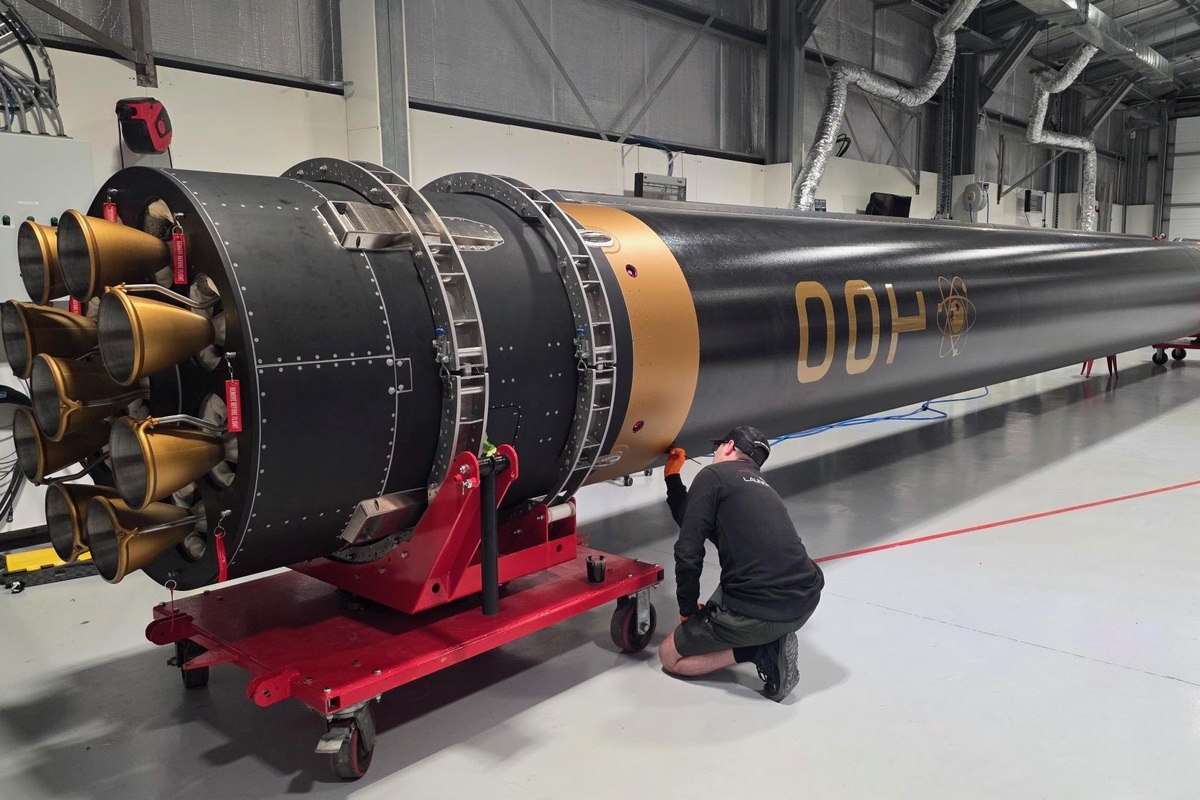
Rocket Lab has reached its 100th launch, sending a Japanese radar-imaging satellite into orbit and marking a milestone for a company built around giving small spacecraft their own ride to space.
The Electron rocket lifted off from Launch Complex 1 in New Zealand on November 14. Rocket Lab confirmed that the mission, called “The Mountain God Rises,” deployed iQPS’s YAMATSUMI-II satellite into an orbit 575 kilometers above Earth.
The company says Electron reached the century mark faster than any other commercially developed rocket. That tally needs one qualification: it includes flights of HASTE, Electron’s suborbital hypersonic-test variant. Space.com noted that HASTE accounts for nine missions. The milestone is not 100 successful orbital deliveries.
A satellite customer keeps coming back
For iQPS, the immediate result was another spacecraft for its Earth-observation network. The operator reported that the satellite, also designated QPS-SAR-19, separated about 50 minutes after launch. Controllers established contact roughly eight minutes later and found its equipment operating normally.
Radar satellites can collect images at night and through cloud cover, giving operators a way to monitor the ground when ordinary optical cameras cannot. Deployment and first contact are early milestones; commissioning and the delivery of usable images follow.
Rocket Lab says it has now flown 11 missions for iQPS since 2023, all successfully, with seven additional dedicated launches booked through 2030. Repeat orders give the launch milestone a commercial significance beyond the round number.
Electron’s pitch is control over the trip
Electron occupies a different part of the market from heavy rockets carrying large batches of satellites. Rocket Lab lists its payload capacity at up to 300 kilograms to low Earth orbit and offers a kick stage that can place small spacecraft into specific orbits.
For a constellation operator, that means buying a flight around the needs of its satellite rather than fitting into another customer’s mission. The trade-off is the cost of a dedicated launch, but control over timing and orbital placement can matter as much as the ticket price.
Electron first flew in 2017. Rocket Lab is also developing the larger Neutron rocket, but its latest result belongs to the smaller vehicle already carrying customers’ spacecraft. The next test of the business is turning a busy order book into the same kind of repeat service.